Newsletter Subscribe
Enter your email address below and subscribe to our newsletter


Discover the top technology trends that will shape 2027, from agentic AI and intelligent robots to post-quantum security, satellite connectivity and programmable money.
Technology is entering a new phase. Artificial intelligence is moving beyond generating content, robots are learning how to navigate the physical world, and new infrastructure is emerging to support increasingly autonomous systems.
For business leaders, understanding these changes is no longer only about following innovation. The technologies gaining momentum in 2027 could reshape operating costs, customer expectations, cybersecurity, product development and competitive advantage.
The following ten technology trends are ranked by their expected commercial impact, maturity and relevance during 2027.
Agentic AI represents the next stage of artificial intelligence. Unlike conventional chatbots, AI agents can plan tasks, use software tools, retrieve information and take actions toward a defined objective.
Multi-agent systems extend this model by allowing several specialised agents to collaborate. One agent might analyse customer data, another prepare a proposal and a third check the work for regulatory or financial risks.
In 2027, businesses will increasingly experiment with agents in customer service, procurement, IT operations, marketing and supply-chain management. According to Gartner’s strategic technology trends for 2026, multi-agent systems could help organisations automate complex processes and create new forms of collaboration between employees and AI.
The opportunity is significant, but companies will need strong access controls, human oversight and clearly defined limits on what agents may do.
AI is changing software development from code assistance to application creation.
Development agents can already generate code, identify defects, write tests and explain unfamiliar systems. AI-native development platforms will increasingly combine these capabilities into environments where small teams can design, build and maintain applications much faster.
This will not eliminate the need for software engineers. Instead, their work will shift toward architecture, security, quality assurance and translating business requirements into reliable systems.
Companies should expect faster product cycles and growing competition from smaller teams. The main challenge will be ensuring that AI-generated software remains secure, understandable and maintainable.
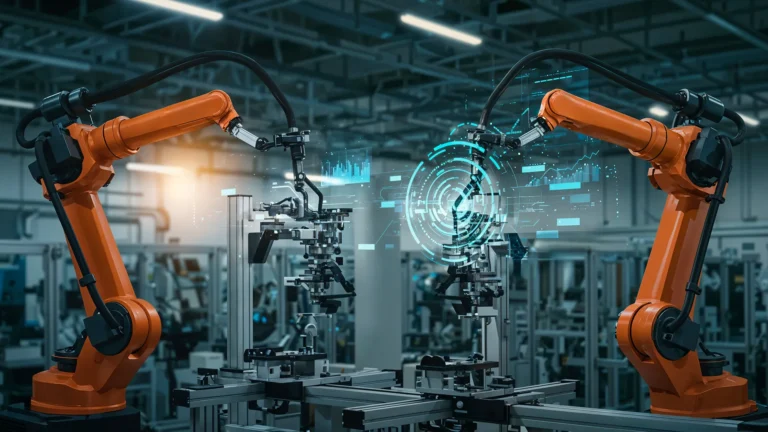
Physical AI brings artificial intelligence into machines that can sense, decide and act in the real world. Examples include warehouse robots, autonomous agricultural equipment, inspection drones and healthcare assistants.
An important development behind this trend is the rise of world models. These AI systems learn how physical environments behave, enabling robots to predict what may happen after an action rather than relying entirely on fixed instructions.
Commercial adoption is already growing. The International Federation of Robotics reported that sales of professional service robots reached almost 200,000 units in 2024, while robot-as-a-service fleets grew by 31%. IFR
During 2027, physical AI is likely to gain the most traction in controlled environments such as factories, mines, farms, hospitals and distribution centres. Fully general-purpose household robots will probably take longer.
The AI infrastructure race is moving beyond training increasingly large models. The next challenge is running AI applications quickly, affordably and reliably for millions of users.
This is driving demand for specialised processors, efficient inference platforms and edge AI. Edge AI processes information close to where it is created, such as on a smartphone, vehicle, camera or industrial machine.
Local processing can reduce latency, lower cloud costs and keep sensitive data on the device. It will become increasingly important for autonomous vehicles, manufacturing, healthcare equipment and mobile applications.
Energy is emerging as a major constraint. The International Energy Agency reported that data-centre electricity consumption increased by 17% in 2025, with demand from AI-focused facilities growing even faster. Access to reliable electricity, cooling and grid capacity may determine which regions become major AI infrastructure hubs.
As organisations place AI inside important workflows, securing those systems will become a distinct cybersecurity discipline.
AI applications introduce risks that traditional security products were not designed to manage. These include prompt injection, sensitive-data leakage, poisoned training data, model theft and AI agents receiving excessive permissions.
Investment is following the risk. Gartner forecasts that the market for securing AI will reach almost $4.8 billion in 2027, representing growth of 68.7% over 2026. Gartner
Digital provenance will also become more important. Watermarks, content credentials and software bills of materials can help organisations verify where digital content, models and software components originated.
Businesses adopting AI should establish governance before deployment expands. This includes maintaining an inventory of AI systems, assigning responsibility for their outputs and monitoring what data and tools each system can access.
Quantum computing continues to attract attention, but its most urgent business impact in 2027 will be defensive.
Powerful quantum computers could eventually break widely used public-key encryption. Attackers may already be collecting encrypted information with the intention of decrypting it when suitable quantum hardware becomes available.
Post-quantum cryptography uses algorithms designed to resist attacks from classical and quantum computers. The US National Institute of Standards and Technology has finalised three principal post-quantum standards and recommends that organisations begin migration planning now. NIST
The transition will involve identifying vulnerable encryption across applications, networks, devices and third-party services. Organisations handling financial, government, healthcare or long-lived confidential information should prioritise cryptographic inventories and crypto-agility.
This does not mean quantum computers will run mainstream business AI in 2027. Gartner expects classical accelerated computing to dominate enterprise AI through at least 2028. Gartner
Electric vehicles, buildings, home batteries and data centres are usually treated as electricity consumers. Everything-to-grid technology allows them to store electricity and return it to the grid when demand rises.
When thousands of distributed assets are coordinated through software, they can operate as a virtual power plant. This can help balance intermittent solar and wind generation, reduce pressure during peak periods and improve resilience.
The World Economic Forum’s 2026 emerging technology report identifies everything-to-grid energy as a technology approaching wider deployment.
Progress will depend on compatible equipment, smart meters, cybersecurity and compensation models that reward customers for supplying flexibility. The trend could be particularly valuable in markets with strong solar resources, constrained grids or unreliable electricity supply.
Satellite direct-to-device technology allows ordinary mobile phones to connect to satellites when terrestrial networks are unavailable.
Early services have concentrated on emergency messages and basic communication. As satellite constellations, mobile devices and spectrum regulations improve, coverage could expand to additional messaging, voice and limited data services.
The technology could support travellers, remote communities, farms, mines, transport operators and disaster-response teams. It may be especially valuable across Africa, where vast distances can make terrestrial network expansion expensive.
However, satellite connectivity will supplement mobile networks rather than replace them. The GSMA warns that satellite systems face significant capacity and spectrum limitations, particularly in populated areas.
Biotechnology is becoming more personalised, computational and programmable.
Personalised mRNA cancer vaccines can be designed around mutations found in an individual patient’s tumour. Engineered exosomes are being studied as vehicles for delivering treatments across biological barriers. Precision fermentation can program microorganisms to produce proteins and other useful molecules.

AI is also being used to analyse biological data, predict toxicity, identify promising drug candidates and improve clinical-trial design. The FDA has reviewed more than 500 drug and biological-product submissions containing AI components since 2016. FDA
In 2027, the most meaningful developments may come from clinical-trial results, manufacturing improvements and clearer regulatory frameworks rather than instant mass adoption. Healthcare organisations must still demonstrate safety, efficacy and model reliability.
Tokenisation places representations of money, securities or real-world assets on programmable digital ledgers.
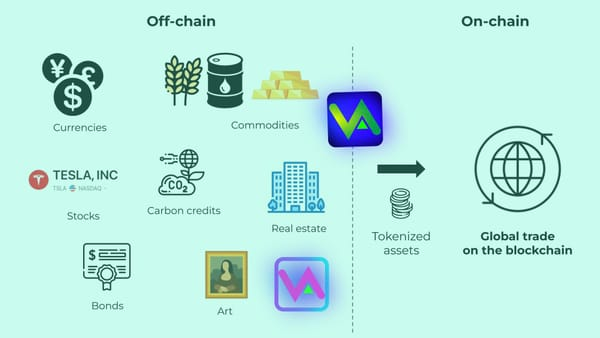
This can allow transactions and settlement rules to be embedded directly into financial instruments. Potential applications include cross-border payments, tokenised deposits, bonds, funds, property ownership and machine-to-machine commerce.
The Bank for International Settlements believes tokenisation could improve financial infrastructure, but it also warns that current stablecoin designs present risks involving financial integrity, monetary sovereignty and trust.
The strongest 2027 opportunities are likely to emerge in regulated financial systems where tokenisation solves a clear settlement or liquidity problem. Businesses should separate practical infrastructure projects from speculative cryptocurrency activity.
Organisations do not need to invest in every technology on this list. A better approach is to identify which developments could materially affect customers, costs, risks or competitors.
Start by evaluating agentic AI and AI-native development because they have the broadest near-term applications. Strengthen AI governance and cybersecurity alongside adoption rather than after systems are deployed. Companies operating in infrastructure-heavy industries should also monitor robotics, distributed energy and satellite connectivity.
Most importantly, focus on measurable business problems. Technology creates lasting value when it improves a process, reduces risk or delivers a better customer outcome.
The defining technology story of 2027 will be convergence.
AI agents will interact with software, robots will act within physical environments, distributed energy systems will support expanding computing infrastructure, and new security technologies will protect increasingly autonomous digital operations.
Some developments will scale quickly, while others will remain in trials or specialised markets. Businesses that distinguish practical adoption signals from hype will be better positioned to invest responsibly and build a durable competitive advantage.
Agentic AI is likely to be the most commercially important trend because it moves artificial intelligence from generating answers to executing complete workflows. Its impact could reach almost every business function.
Quantum research will continue advancing, but mainstream enterprise adoption is unlikely in 2027. Post-quantum cryptography is the more immediate priority because organisations need to protect data before powerful quantum computers arrive.
Satellite direct-to-device connectivity, distributed energy systems, AI-enabled financial services, precision agriculture and intelligent automation could have particularly strong regional applications.
Small businesses should prioritise practical AI tools, employee training, cybersecurity and data governance. They should test technologies through focused pilot projects with clear performance measures before making larger investments.
No forecast is certain. These trends are based on current adoption, investment, research and regulatory signals. Market conditions, technical limitations and policy decisions may change how quickly each technology develops.